

A quick estimate of how many laser treatments you’ll need to remove your tattoo — based on the scientifically backed Kirby‑Desai method.
Laser tattoo removal - Belgrade - dr Marija Bošković
Remove an unwanted tattoo or lighten it before a cover-up, with a medical assessment of your skin and a combination of two pico lasers, Picolo Premium and HELIOS 785, for different colours and the most persistent pigments.
What should you know if you decide on laser tattoo removal?
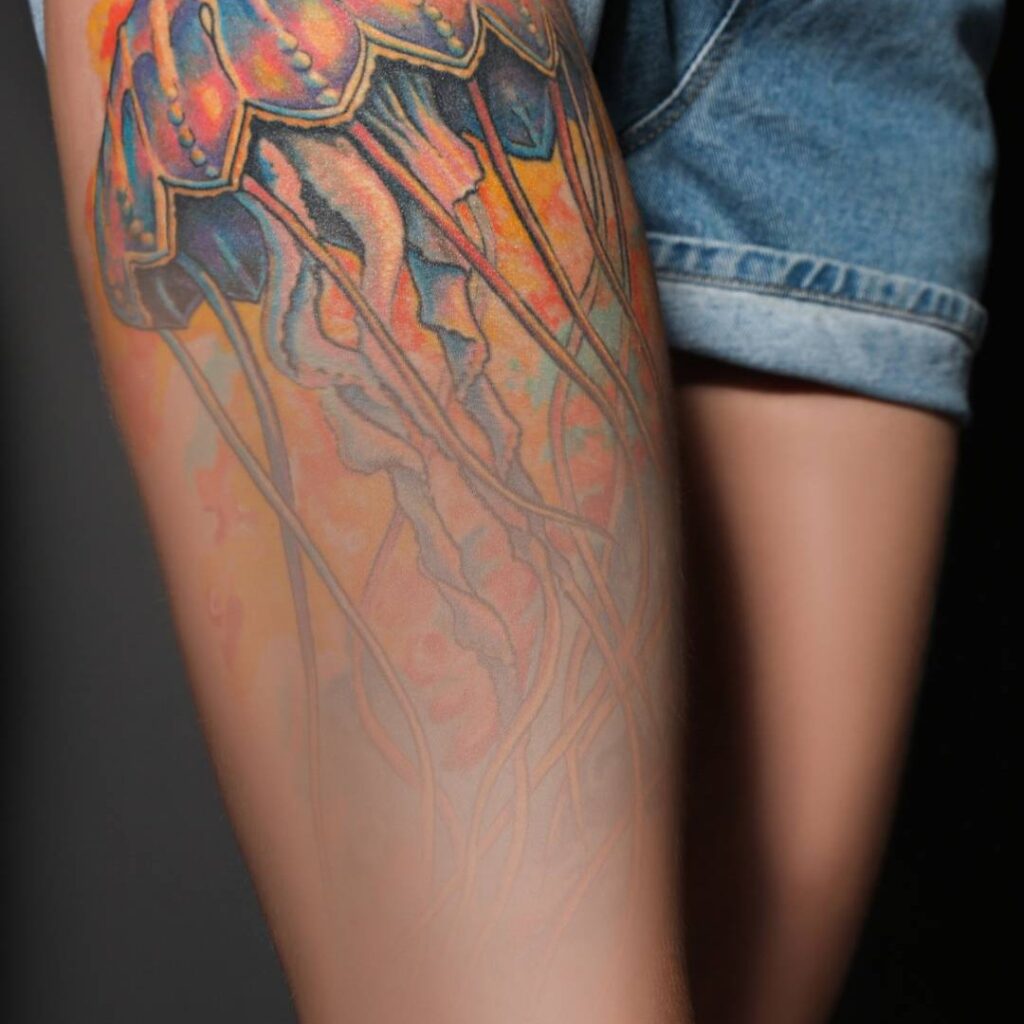
Most tattoos can be removed, but you should know that some tattoos are removed completely by the laser, while others may leave a faint shadow, a change in skin tone or a so-called ghost tattoo.
The effect of the laser depends on:
- the colour and chemical composition of the ink: black and dark blue pigments usually respond more predictably, while certain green, turquoise, yellow, white and fluorescent shades may require a different approach;
- the depth and amount of pigment: professional tattoos usually contain more ink and are placed more evenly than amateur ones, so they are removed more uniformly;
- the number of colours, overlaps and later corrections;
- the age of the tattoo and the body region where it is located;
- the type and current condition of the skin, and any tendency to pigmentation and scarring;
- previous removal attempts with laser, chemical removers, acids or other methods;
- the time given to the skin and the body between two sessions.
These conditions determine how quickly the tattoo will be removed and how your skin will react. That is why a specialist assessment by the doctor at our practice is essential: we need to assess how the pigment may react and how to reach the result without unnecessary risk to the skin.
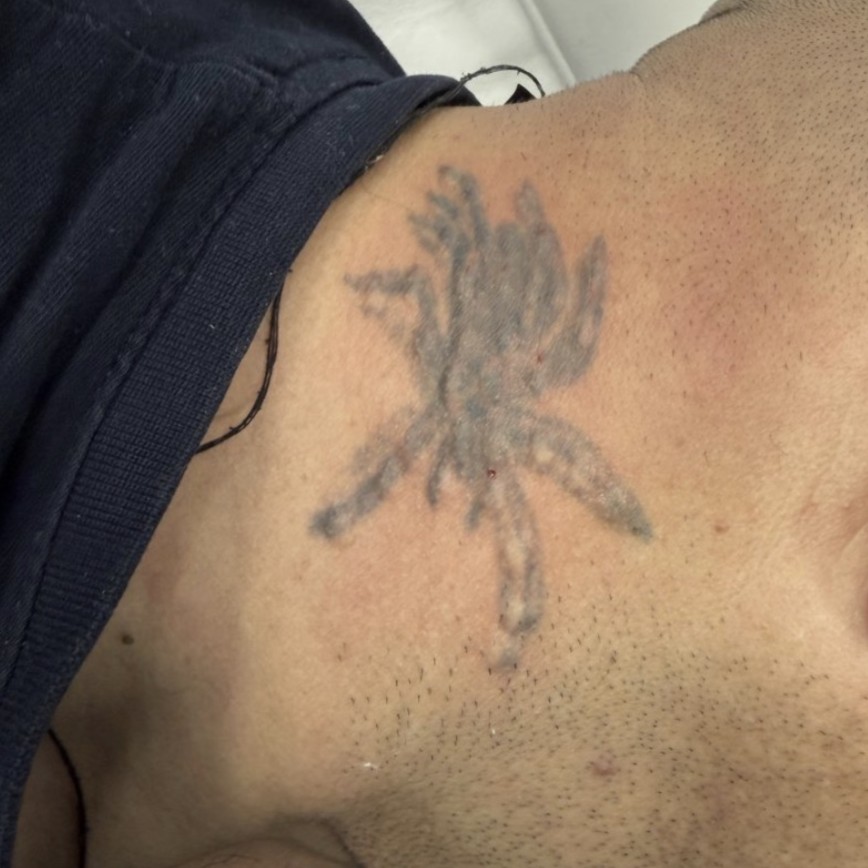
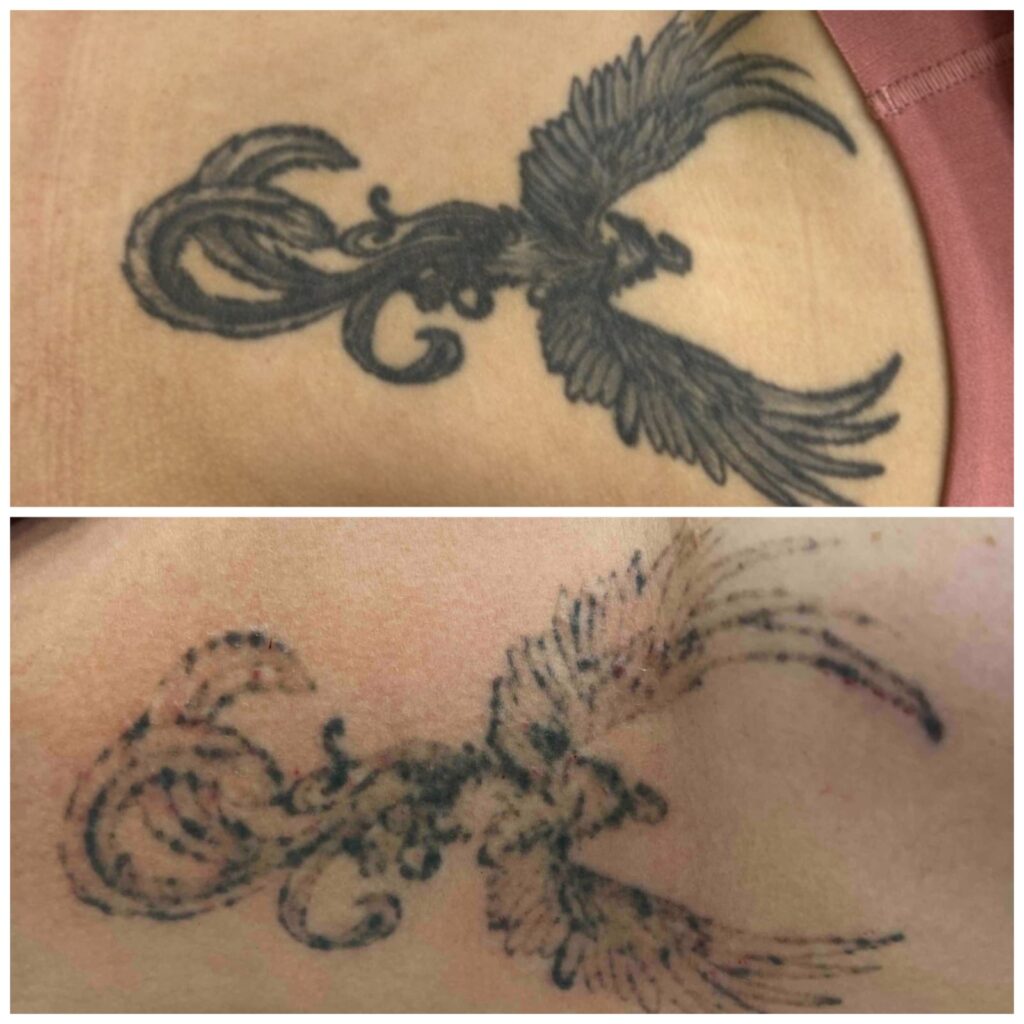
Before
After 3 treatments
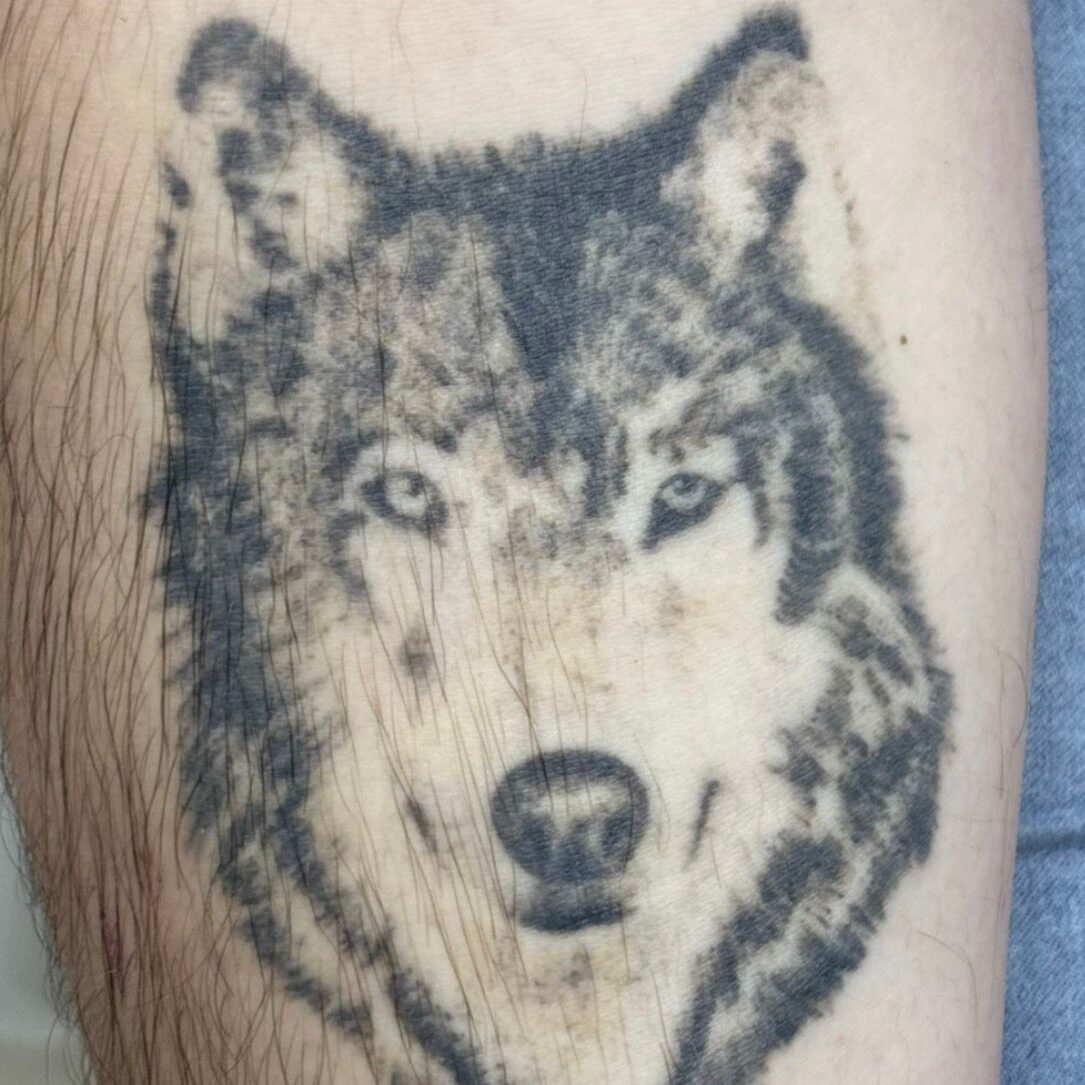
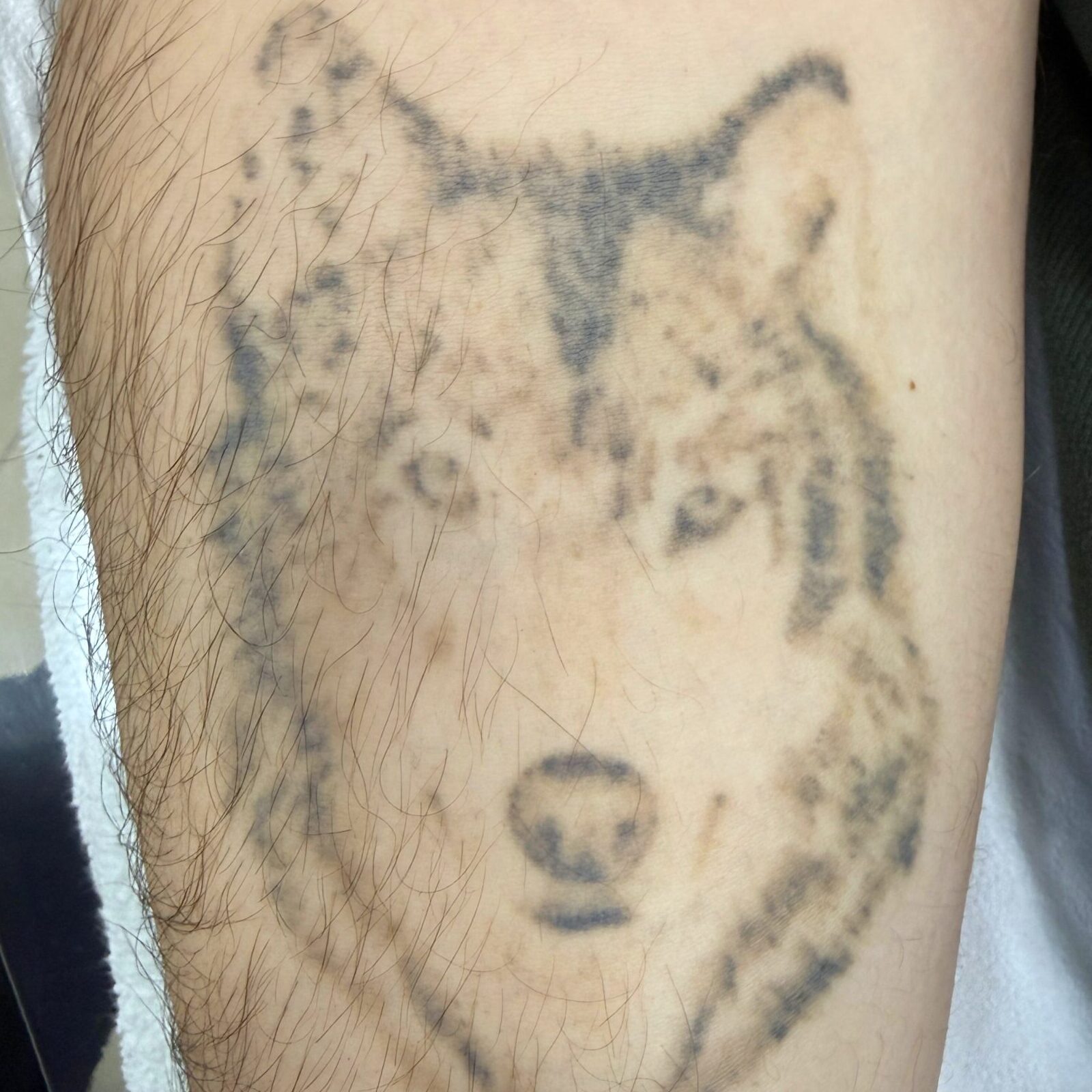
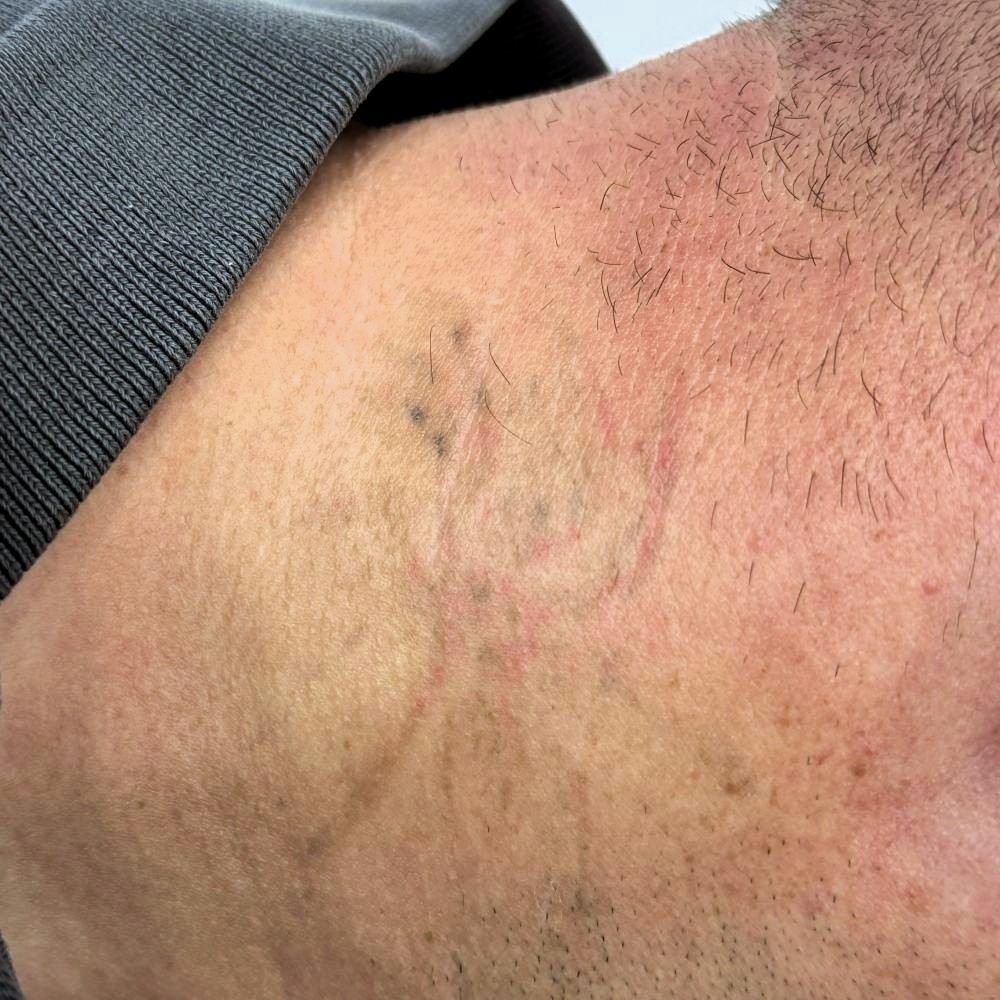
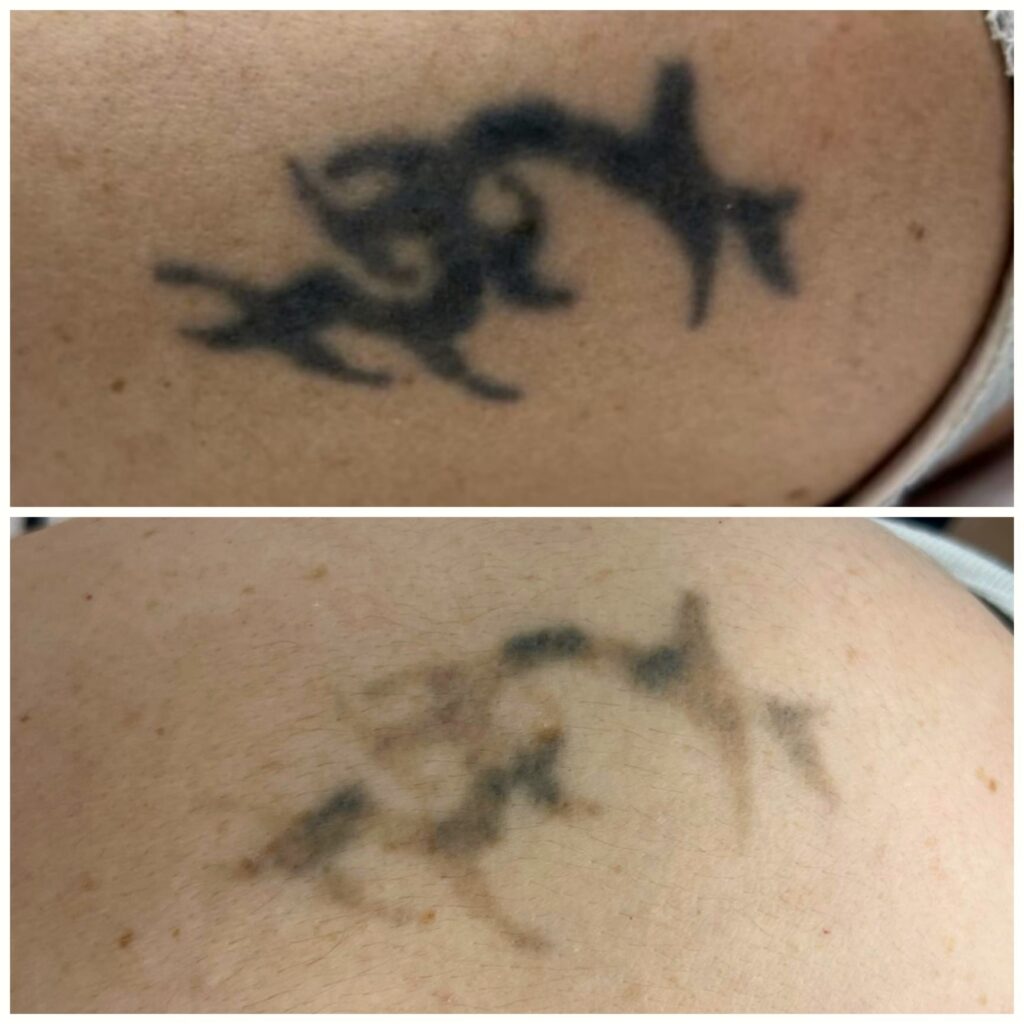
Before
After 3 treatments
What does laser tattoo removal look like at dr Marija Bošković's practice?
Consultation and examination
We talk about when the tattoo was done, whether it is professional or amateur, whether it has been reworked and what it has been treated with before. The doctor examines the skin and assesses the pigment, any scars, active lesions, medications and health conditions that may affect healing. We then agree on the goal: either complete removal or enough lightening for a cover-up.
Photographs and plan
We record the initial condition, assess the colours and make an outline plan. If the composition of the pigment or the skin’s reaction is uncertain, a test pulse can be done on a small area and the response observed.
Preparing the area
The skin is cleaned and disinfected. Everyone present receives appropriate eye protection, and the surrounding sensitive structures and any skin lesions are additionally protected where needed.
Reducing discomfort
Depending on the region and the size of the tattoo, local anaesthesia may be applied, and a cooling system is used during the procedure. Injected anaesthesia is also available at the practice, so the treatment can be completely painless. Do not apply anaesthetic cream yourself before your visit unless you have received precise instructions from the practice.
Laser treatment
The pulses are guided over the pigment in a controlled way, segment by segment. Smaller tattoos are treated briefly, while the duration for larger ones depends on the surface area, the number of colours and the skin’s reaction. It is important to note that tattoos larger than A4 format are not treated all at once, but are divided into regions treated over several sessions. Also, if you have a tattoo drawn in a circle around a limb, treating it all at once is avoided so that swelling does not obstruct the flow of lymph; one half is treated, then the other, on consecutive days.
Aftercare and follow-up
The treated area is given the necessary care, you receive written home-care instructions and an appointment for a check-up or the next assessment. The team stays in touch to monitor your recovery.
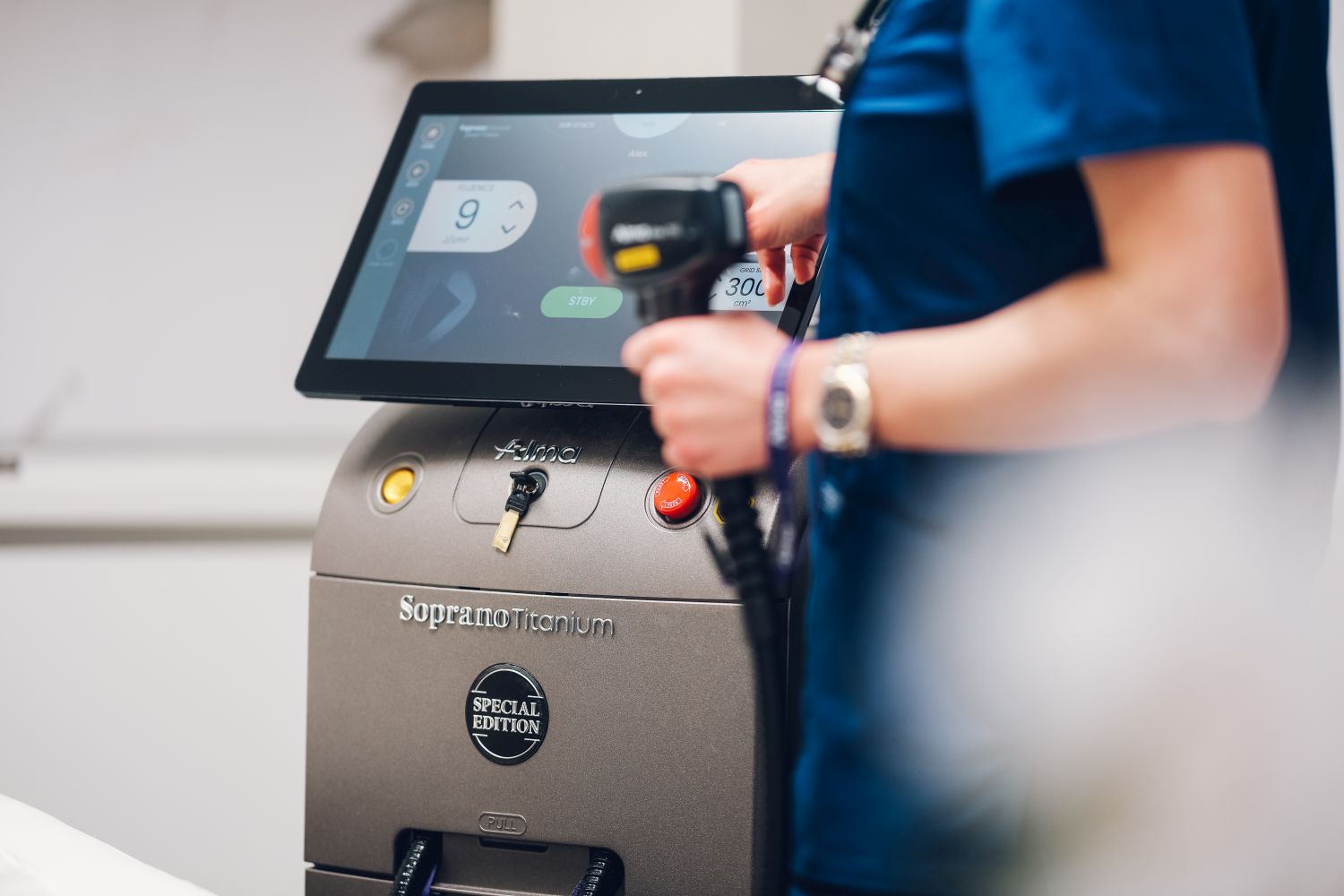
Lasers for tattoo removal at our practice
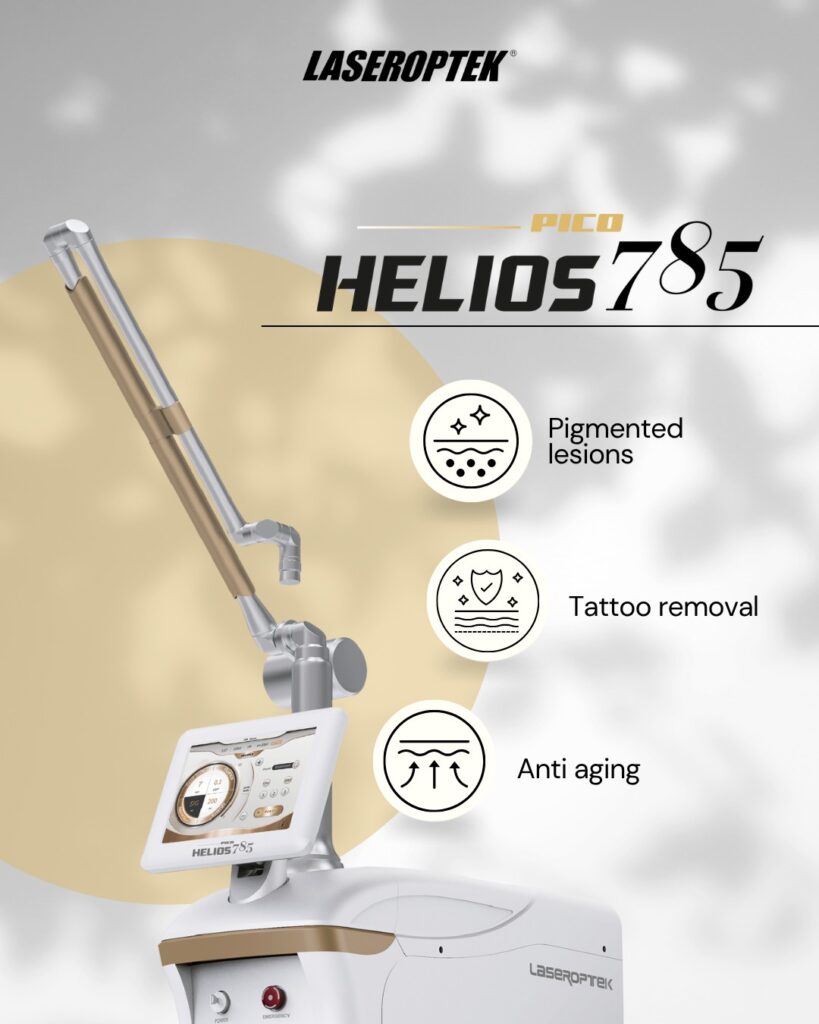
Dr Marija Bošković’s practice combines two pico lasers, the Picolo Premium and HELIOS 785 systems, two of the most effective laser systems on the market. The choice of device and parameters is based on the shade of the pigment, its depth and the skin’s response.
What HELIOS 785 nm offers
- Superior effectiveness on resistant pigments
- Faster fading of ink deeper in the skin
- Precision without damage to surrounding tissue
- Safety for different skin types
PICO HELIOS LASER
For the most resistant pigments and demanding colours we use the HELIOS 785 PICO. The 785 nm wavelength is highly specific for pigment, that is, melanin and tattoo pigment, with minimal effect on the surrounding tissue and haemoglobin. It is precisely this selectivity that makes it possible to treat demanding blue, green and purple pigments, as well as shades that other lasers struggle to recognise.
PICOLO PREMIUM LASER
It is specifically designed for the safe and effective removal of tattoos and permanent makeup (eyebrows, lips, eyeliner) without damaging the surrounding skin.
It is an advanced pigment removal technology with two wavelengths, 1064 nm and 532 nm. It is effective for tattoos in black, red, dark brown, purple, orange and yellow.
Picolo Premium uses LIOB technology (Laser Induced Optical Breakdown), which allows work at different skin depths through three levels: Level 1 in the deep dermis, Level 2 at the dermo-epidermal junction and Level 3 in the epidermis.
For very dense and deeply placed tattoos, the ability to work at Level 1 and Level 2 allows the treatment to be directed at pigment located deeper in the skin. This approach is particularly important for saturated tattoos, where the density and depth of the pigment make removal more difficult.
Picolo Premium and HELIOS 785 PICO complement each other ideally when a tattoo contains several different colours or pigments that require a different wavelength. The combination of these two lasers makes us one of the few clinics in Serbia with both of these top-class picosecond systems.
How many treatments are needed to remove a tattoo?
For most professional tattoos at least 6 treatments are needed, and often more. Amateur and older tattoos with a smaller amount of black pigment may respond faster, while multicoloured, layered, reworked, very saturated and deeply placed tattoos require a longer process. The number of sessions cannot be reliably determined from a photograph alone, nor guaranteed before we see how the pigment responds.
The interval between two treatments also depends on the region. For tattoo removal on the face, treatments are planned approximately one month apart, while for tattoos on the body approximately two months are left between sessions. The interval may be longer if the skin heals more slowly, if a large area is being treated or if we want to give the body more time to clear the fragmented pigment.
How long does laser tattoo removal take?
The laser treatment itself takes considerably less time than patients often expect.
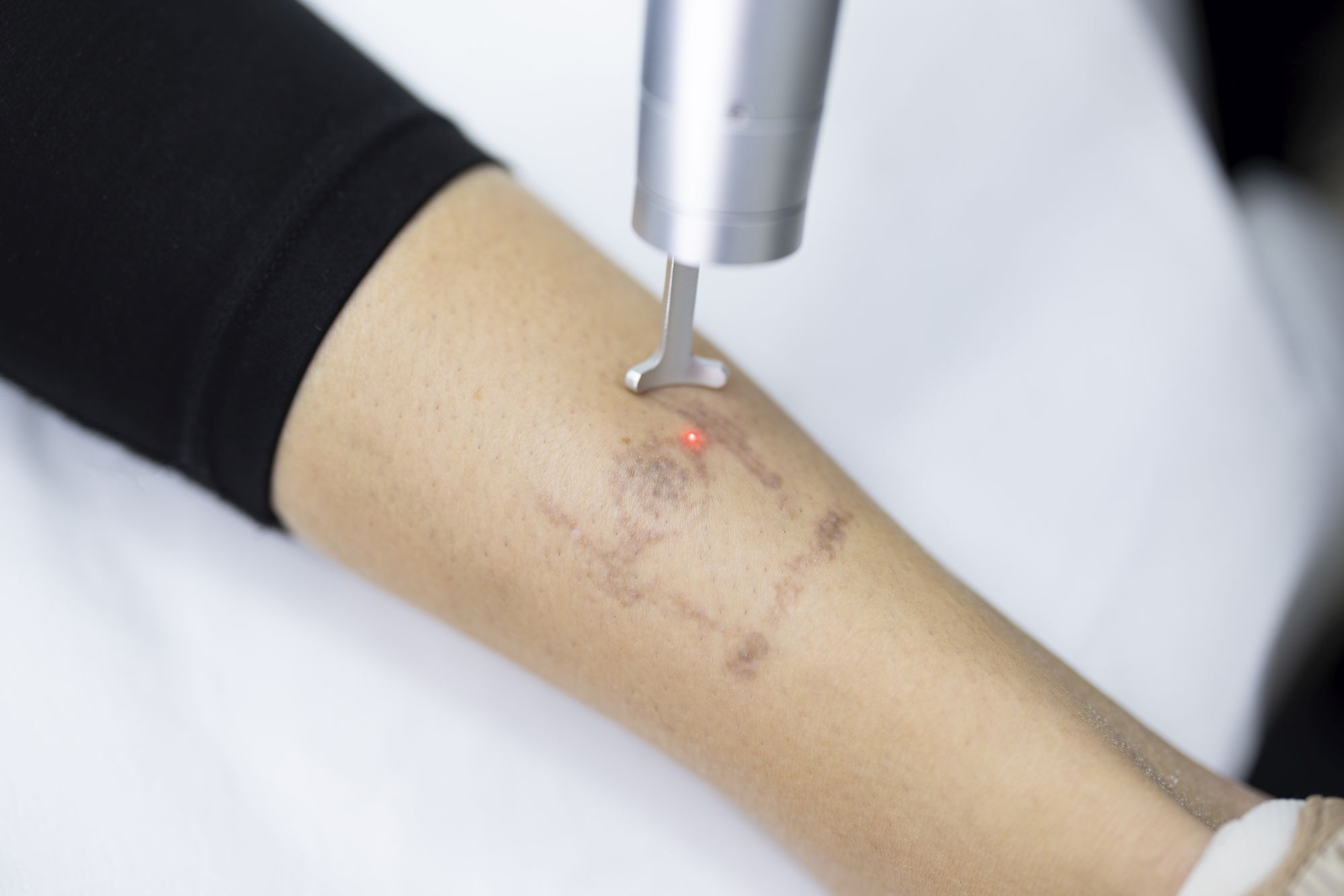
For most tattoos, the laser work takes approximately 5 to 10 minutes, while for very large areas it can take around 15-20 minutes.
However, preparation also needs to be taken into account. On arrival, the patient fills in a medical history form and signs a consent form, and if needed a local anaesthetic cream is applied, which takes approximately 30 minutes to work, or local lidocaine anaesthesia is given.
For this reason, patients usually spend around 30 to 45 minutes at the practice, depending on the size of the area and the type of anaesthesia.
On which body regions are tattoos removed fastest?
The location of the tattoo has a significant effect on the speed of removal.
Tattoos closer to the head and neck are usually removed faster, while the process can be slower on more distant parts of the body, such as the forearms, lower legs, palms and feet. One reason is their distance from the main lymph nodes, because once the laser breaks up the pigment, the body needs to gradually clear its particles.
The depth at which the tattoo artist placed the pigment also matters. If the pigment was placed very deep in the dermis, removal may be slower, and its exact depth cannot be reliably known in advance.
Tattoos where scar tissue is already present require a special approach. The pigment may be trapped in the scar, and then treating the pigment alone is not always enough. In such cases, when indicated, the plan at dr Marija Bošković’s practice may also include a CO₂ laser so that the scar tissue and the remaining pigment are treated at the same time.
What does the skin look like after treatment?
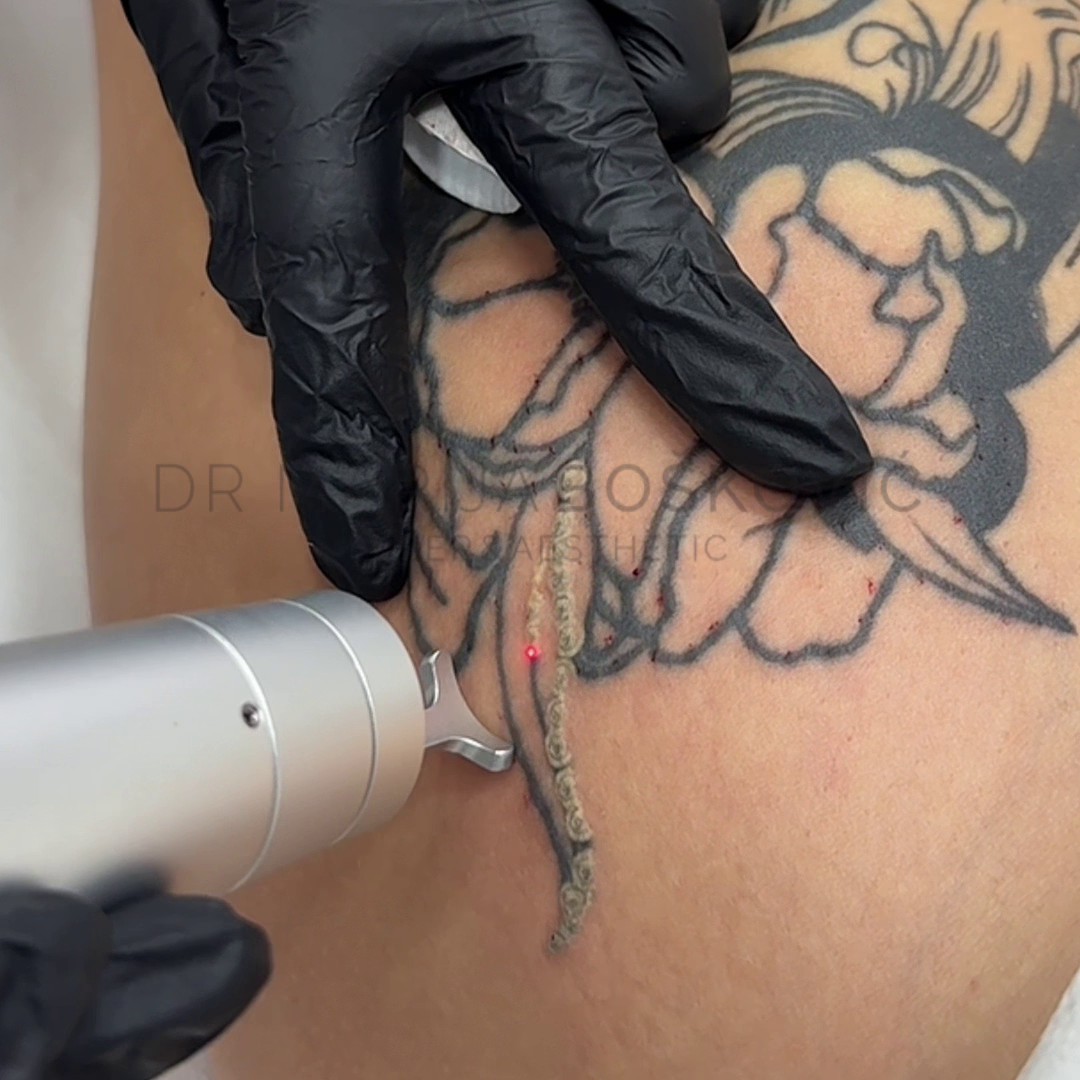
The skin’s reaction depends on the amount and colour of the pigment, the region and the parameters used. Immediately after the treatment you can expect:
- a temporary whitish reaction on the surface of the tattoo;
- redness, a feeling of warmth, tenderness and mild swelling;
- the appearance of small petechial dots
Most patients return to their usual daily activities immediately, although the doctor’s recommendation is to postpone exercise.
Contact the doctor if the redness starts to spread, the pain gets worse instead of better, or if pus, an unpleasant smell, fever or any other reaction that worries you appears. Early assessment reduces the risk of infection and scarring.
Skin care after tattoo removal
You will receive exact instructions according to your skin’s reaction and the region, but the basic rules are:
- cool the area with short cold compresses if recommended, without placing ice directly on the skin;
- use only the product recommended by the practice and keep the area clean according to the instructions you received;
- do not scratch the skin
- avoid tight clothing, friction and exercise while warmth, swelling and tenderness are present;
- do not use a sauna, swimming pool or jacuzzi and do not expose the area to prolonged soaking until the surface has healed;
- do not expose the area to the sun; once the skin is no longer open or irritated, protect it with broad-spectrum SPF 50+ and clothing.
How to prepare for laser tattoo removal?
- Wait for a new tattoo to heal completely. In practice this usually takes at least 6-8 weeks, and longer if healing is slower.
- Do not expose the area to be treated to the sun, and do not use tanning beds or self-tanning products before your visit. Tanned and irritated skin carries a higher risk of burns and pigmentation changes.
- Inform the doctor about all medications and supplements, especially any therapy that affects blood clotting, photosensitivity, immunity or healing. Never stop a therapy on your own initiative.
- Tell us if you are prone to keloid scars or hyperpigmentation, if you get herpes, or if you have previously had an allergic reaction to tattoo ink.
- If you know the name, manufacturer or composition of the ink, bring that information with you. It is especially useful for white, fluorescent and so-called skin-tone corrections.
- Come to the treatment with clean skin, without creams, oils, perfume or self-tanner on the area.
Does laser tattoo removal hurt?
The sensation is most often described as a series of quick stings or the snap of a rubber band against the skin. The intensity depends on the region, the size, the saturation of the pigment and your personal sensitivity threshold. Cooling and, when indicated, local anaesthesia make the treatment more tolerable. Since the laser works quickly, small tattoos are often finished in just a few minutes.

Why do patients choose dr Marija Bošković's practice for tattoo removal?
The biggest fear of patients coming for tattoo removal is often not the pain during the treatment, but the question: “Will I be left with a scar after the tattoo?”
Patients in whom scar tissue already formed during tattooing are particularly concerned. Removing the pigment does not give the same aesthetic result if a raised or lighter “shadow” of a scar remains in its place.
That is why the approach at dr Marija Bošković’s practice is aimed both at removing the pigment and at preserving the integrity of the skin in the long term. More aggressive energies can speed up the visible lightening of a tattoo, but pronounced blisters, crusts and skin injuries increase the risk of unwanted consequences and scarring. The goal is not to remove the tattoo at any cost and as fast as possible, but to remove the pigment gradually while preserving healthy skin as much as possible.
A particular advantage is the ability to treat multicolour tattoos. The combination of the Picolo Premium and HELIOS 785 PICO systems allows the doctor to adapt the approach to the colour and behaviour of the pigment during the process, including blue, green, purple and other demanding shades.
Reviews from our patients on Google translated from Serbian.

5.01436 reviews
5.01436 reviewsPosted on Google
 Milena Skoko22/05/2026I'm so happy I got my eyebrow tattoo removed and I almost have no more after 2 lasers!
(Translated by Google, see original)Posted on Google Jelena Marinkovic01/05/2026Dr. Boskovic is fantastic. I removed the old eyebrow work with a laser. I am satisfied.
(Translated by Google, see original)Posted on Google Milena Đorđević27/04/2026I had my eyebrow tattoo removed with laser. Professional approach, clean and tidy, clear communication and detailed instructions for aftercare. Recommended.
(Translated by Google, see original)Posted on Google Jelena manic22/04/2026I am very pleased with your laser, my eyebrows disappeared from the first time... and as for the entire team and the doctor, I have nothing but praise.
(Translated by Google, see original)Posted on Google Jasmina08/04/2026All praise for this clinic. I had laser eyebrow removal and I am very satisfied with the results. The treatment was done professionally, most importantly painlessly, and with a detailed explanation of each step. The staff is very kind, pleasant, and dedicated. I would definitely recommend it to anyone who wants safe and quality results.
(Translated by Google, see original)Posted on Google Vanja27/03/2026The tattoo removal procedure was quick and painless, I'm looking forward to my next appointment. Extremely friendly and professional staff, recommendations :) I'll try other services soon :)
(Translated by Google, see original)Posted on Google Andrijana Obradovic02/09/2025All recommendations for laser hair removal and tattoo removal with Dr. Marija.
(Translated by Google, see original)
Frequently asked questions about laser tattoo removal
Is a black tattoo the easiest to remove?
Black pigment usually absorbs the 1064 nm wavelength well and often responds more predictably than light and multicoloured inks. However, a very deep, dense or repeatedly reworked black tattoo may require a large number of sessions.
Can I just lighten a tattoo for a cover-up?
Yes. Complete removal is not always necessary. A few sessions can reduce the saturation and give the tattoo artist more options to create a better new design. Ideally, the removal plan and the future cover-up should be coordinated in advance.
Does a scar remain after tattoo removal?
The aim of a properly performed treatment is to break up the pigment while preserving the surrounding skin as much as possible, but no medical procedure has zero risk. Scarring can be influenced by previous skin damage, overly aggressive treatments, infection, picking at scabs and individual predisposition. Sometimes a scar already exists beneath the tattoo and only becomes visible once the ink fades.
Can tattoo removal be done in summer?
Only if the treated area is not tanned and can be reliably protected from UV radiation during recovery. For areas that are constantly exposed to the sun, it is often safer to plan treatments for a period when you can cover them.
Why is an interval of about two months needed?
The skin needs time to recover fully, and the body needs time to gradually clear the fragmented pigment particles. Coming earlier does not automatically mean faster removal and can unnecessarily increase the risk of adverse reactions.
Can creams and home methods remove a tattoo?
They cannot safely reach pigment located in the dermis. Acids, abrasion and bleaching products can damage the surface of the skin and leave a scar or permanent discolouration, while the ink remains in the deeper layer.
Do you also remove permanent makeup?
Yes, but permanent makeup requires a special protocol because of the composition of the pigments and the sensitive regions of the face. Read more about removing eyebrow, lip and permanent eyeliner pigment on the page Laser removal of permanent makeup.
A good assessment by the doctor matters more than promises of quickly erasing a tattoo. At a free consultation, dr Marija Bošković examines your skin and tattoo, discusses the result you want and proposes a safe plan, for complete removal or for lightening before a new tattoo.
Where to find us?
dr Marija Bošković – Laser and Aesthetic is located at Bulevar umetnosti 13 / 2 in New Belgrade.
There is a garage car park nearby, in Novi Merkator, while street parking in Zone 3 is available in the surrounding streets.
For more details you can watch the video how to find us.
We are open every day from 9 a.m. to 9 p.m.